
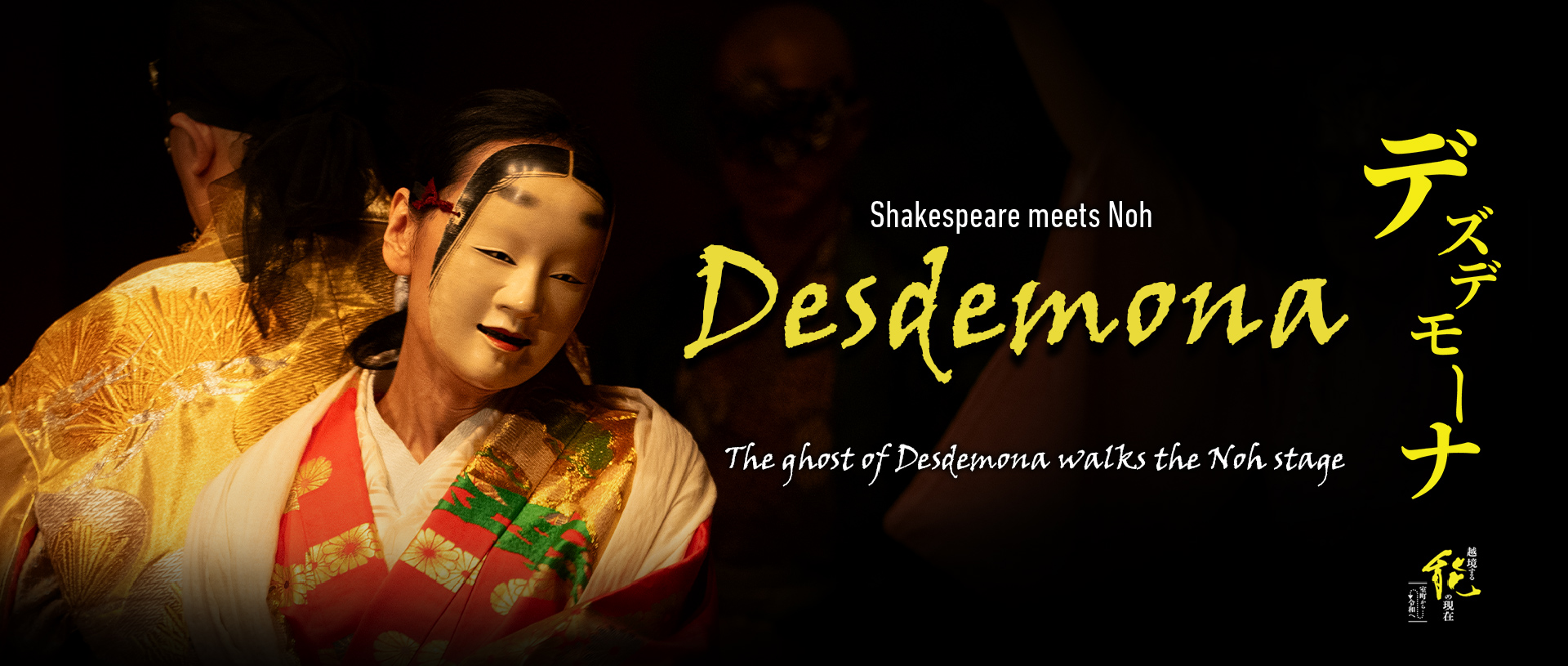
Malaysians enjoy contemporary Japanese culture but rarely encounter its classical heritage. Similarly, while Shakespeare is widely known, many have limited direct exposure to his plays. “Shakespeare Meets NOH: DESDEMONA” addresses both gaps by uniting Shakespeare and Noh theatre—two major artistic traditions—into an accessible experience. Audiences are introduced not only to “The Tragedy of Othello”, a work that has endured for over 400 years, but also to a 14th-century Japanese dance-drama form seldom presented in Malaysia.
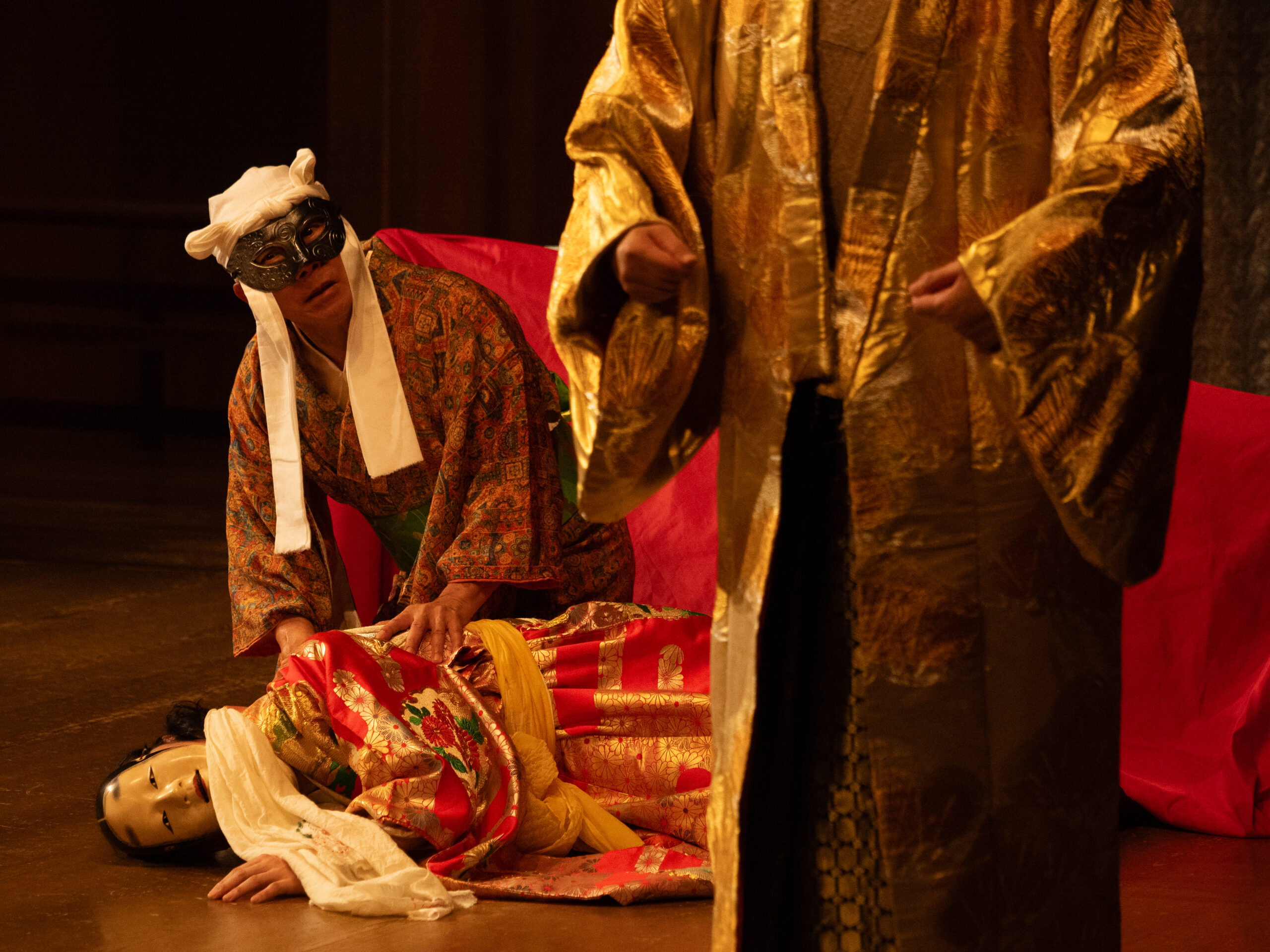
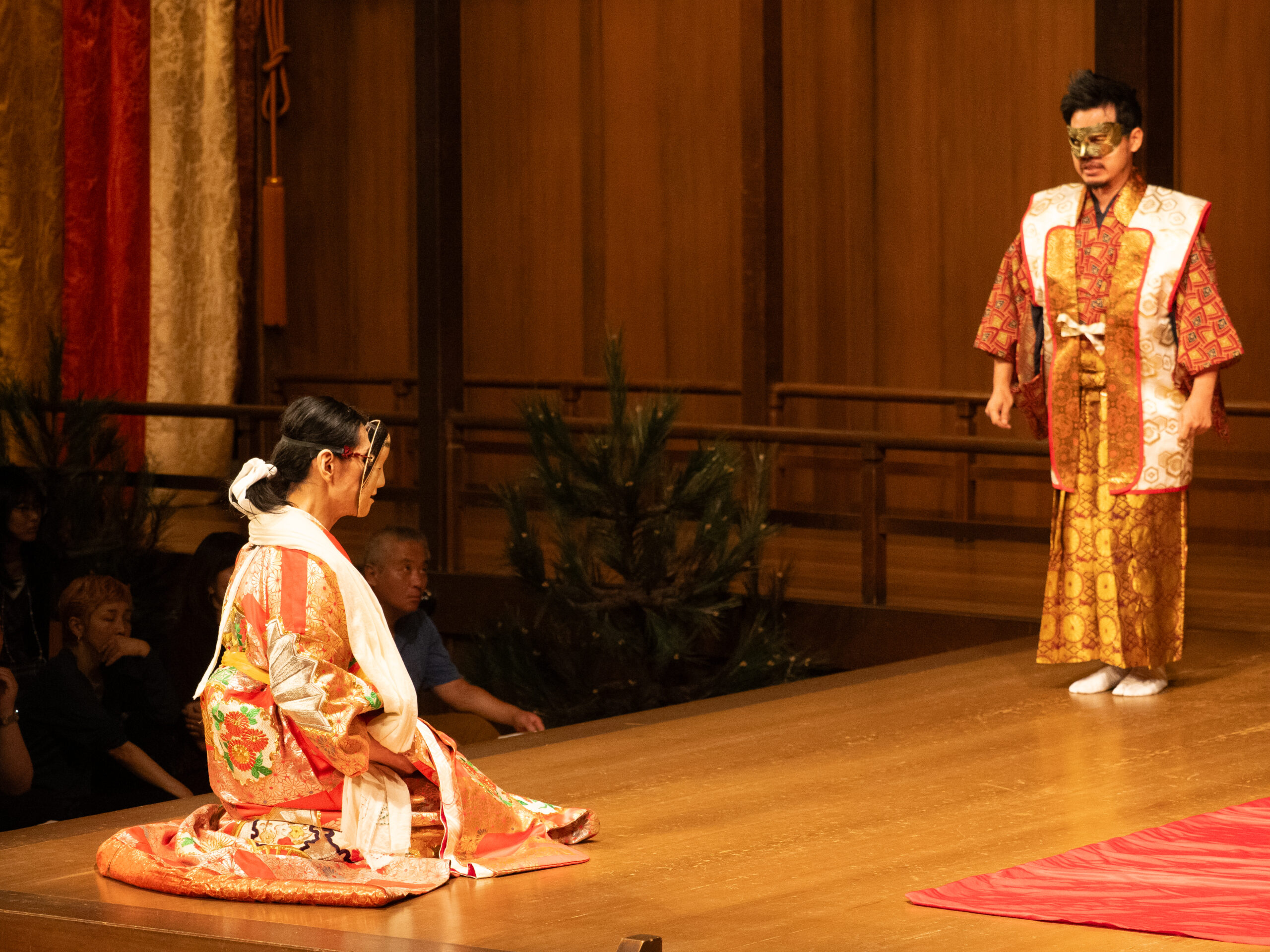
“Shakespeare Meets NOH: DESDEMONA” reimagines Shakespeare’s “The Tragedy of Othello” by shifting the focus to its central female character. Drawing on the tradition of Noh theatre, this work envisions an afterlife in which Desdemona—tragically killed by her jealous husband, Othello—is finally reconciled with him, who appears remorseful and who ultimately recognises her innocence.
The story begins on Cyprus Island with a Japanese monk who comes nightly to the coast to chant prayers and sutras for those who perished in the battles between the Italian and Turkish navies. On this calm night at Naruto Bay, he notices an embroidered robe hanging on pine branches. Attached to it is a poem. As he reads it aloud, Aphrodite appears and claims that the robe that belongs to her. The robe, she explains, contains the shared story of all women. She tells the monk of Apollo and Coronis, and of Othello and Desdemona—women who died at the hands of jealous lovers. The spirits of these women remain unfulfilled and restless.
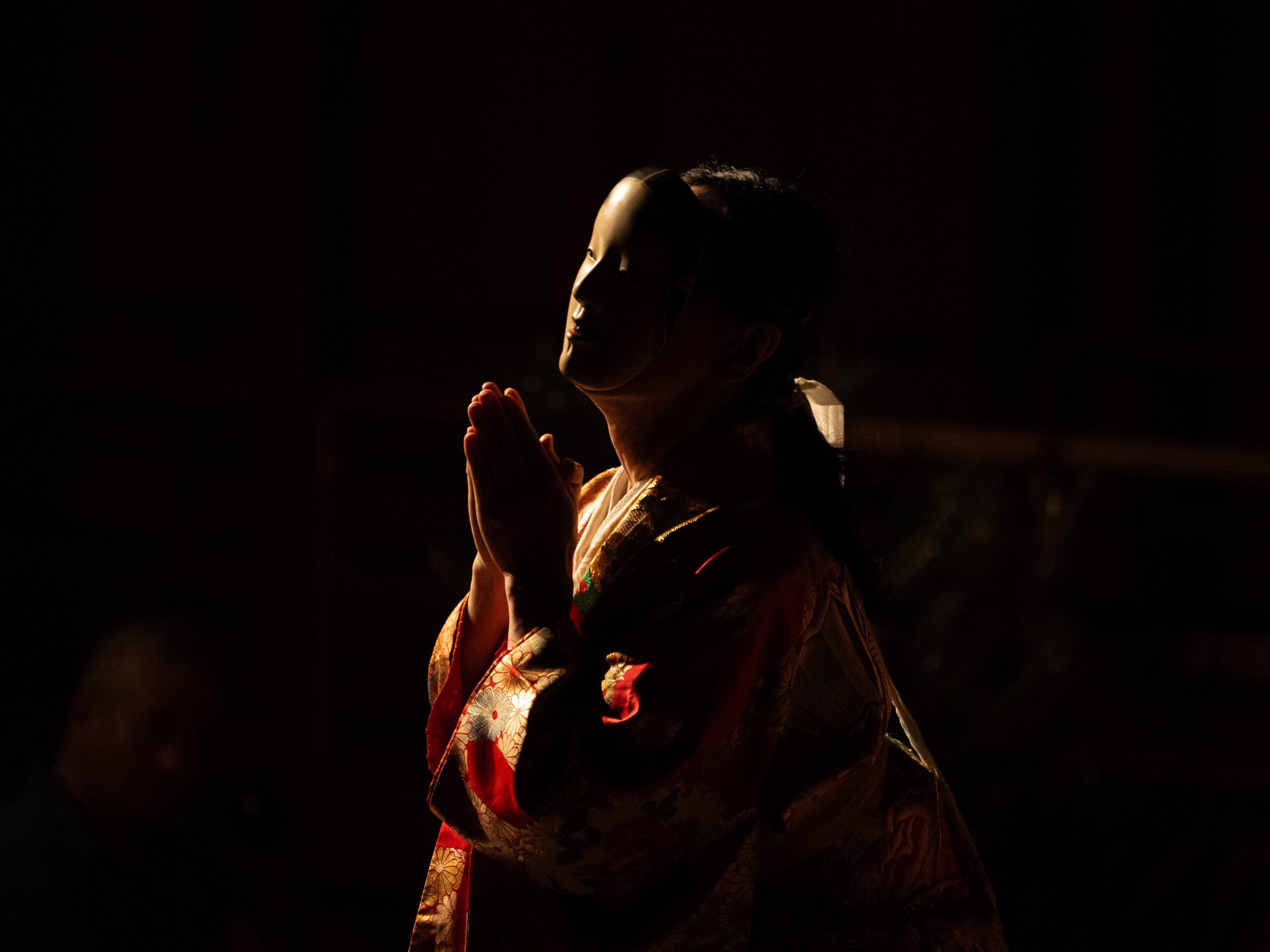
Desdemona’s tale unfolds once more. After her death, through the monk’s prayers, she is resurrected and given the power to confront Othello and seek reconciliation on her own terms. Having achieved resolution, she finally ascends to heaven.
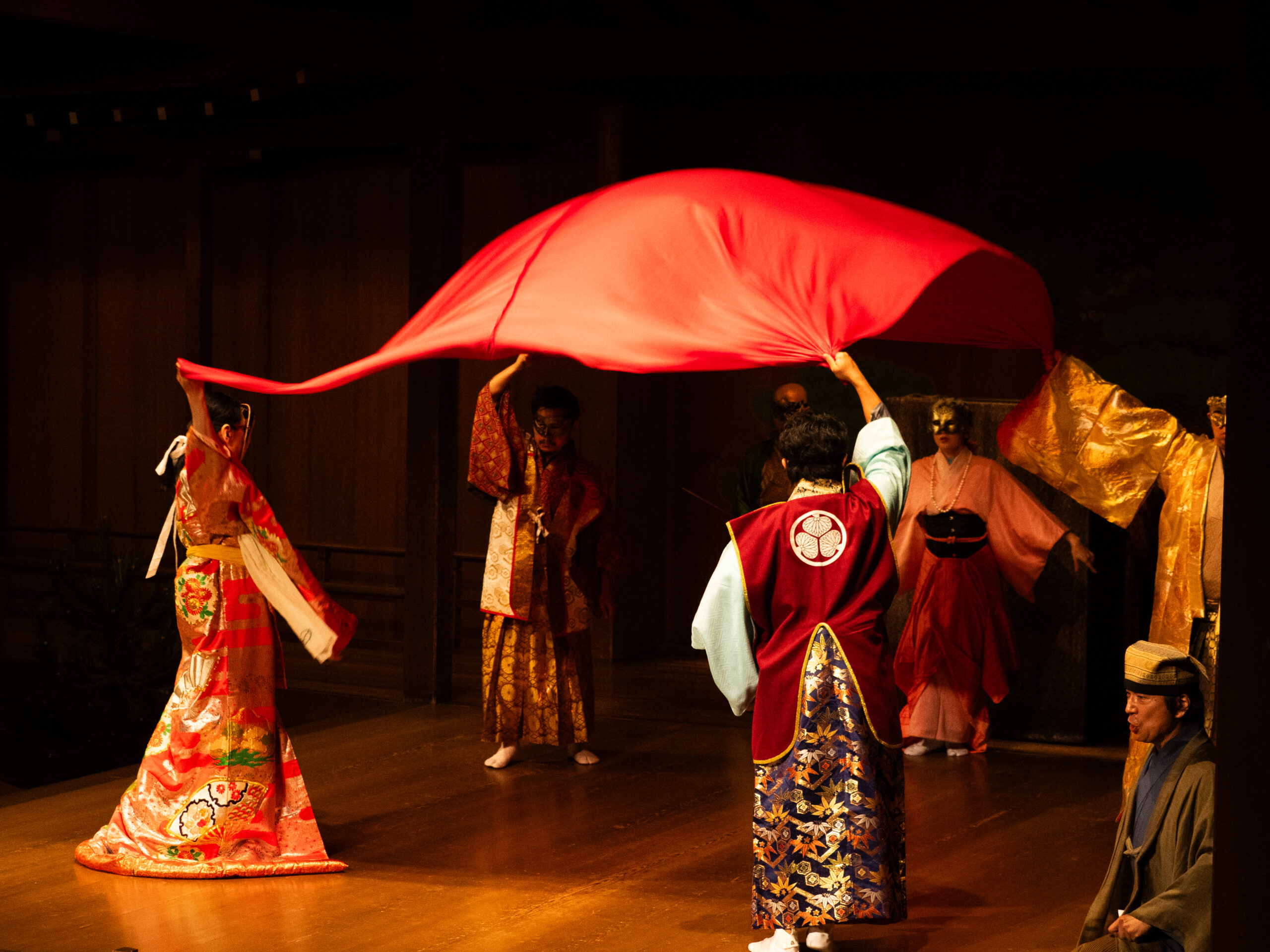
Desdemona is anchored in Noh theatre’s ritual of releasing the spirits of departed women. In this production, KL Shakespeare Players’ Shakespearean expertise meets Noh’s refined costumes, movement vocabulary, and ceremonial structure. The performance is multilingual—Japanese, English, Malay, and Chinese—inviting audiences to understand with their eyes and hearts and to listen deeply to its evocative soundscape by Santosh Logandran and the musicians from LifeArtUnion.
About the Collaborators:
Founded in 2011, KL Shakespeare Players is Malaysia’s only full-time touring theatre company that performs Shakespeare. In 2017, the company expanded its repertoire beyond Shakespeare to include works by local and international writers, reimagined into accessible performances for diverse audiences. The company stages more than 85 performances annually, with 164 shows presented in 2023 and 161 in 2024.
Its work spans live theatre, hybrid folktale storytelling with projected images, puppetry, and interactive online shows. During the pandemic, the company reached audiences in Singapore, New Zealand, Australia, Japan, and the US. From 2023 to 2025, it toured a Bajau Sama folktale to every Malaysian state, presenting about 160 shows to over 16,000 children.
The company collaborates regularly with local and international artists, including David Glass (UK), Hiroshi Koike (Japan), and Jinya Imai of LifeArtUnion. It has also toured internationally in the Philippines, Indonesia, South Korea, Japan, and Italy, where its performances received awards in an international competition.
This production is a collaboration among KL Shakespeare Players, NOH-based LifeArtUnion and the multi-genre, Malaysian musician Santosh Logandran, who has composed music for some of Malaysia’s highest-grossing films, such as “Mat Kilau” and “Sheriff”.
Photos