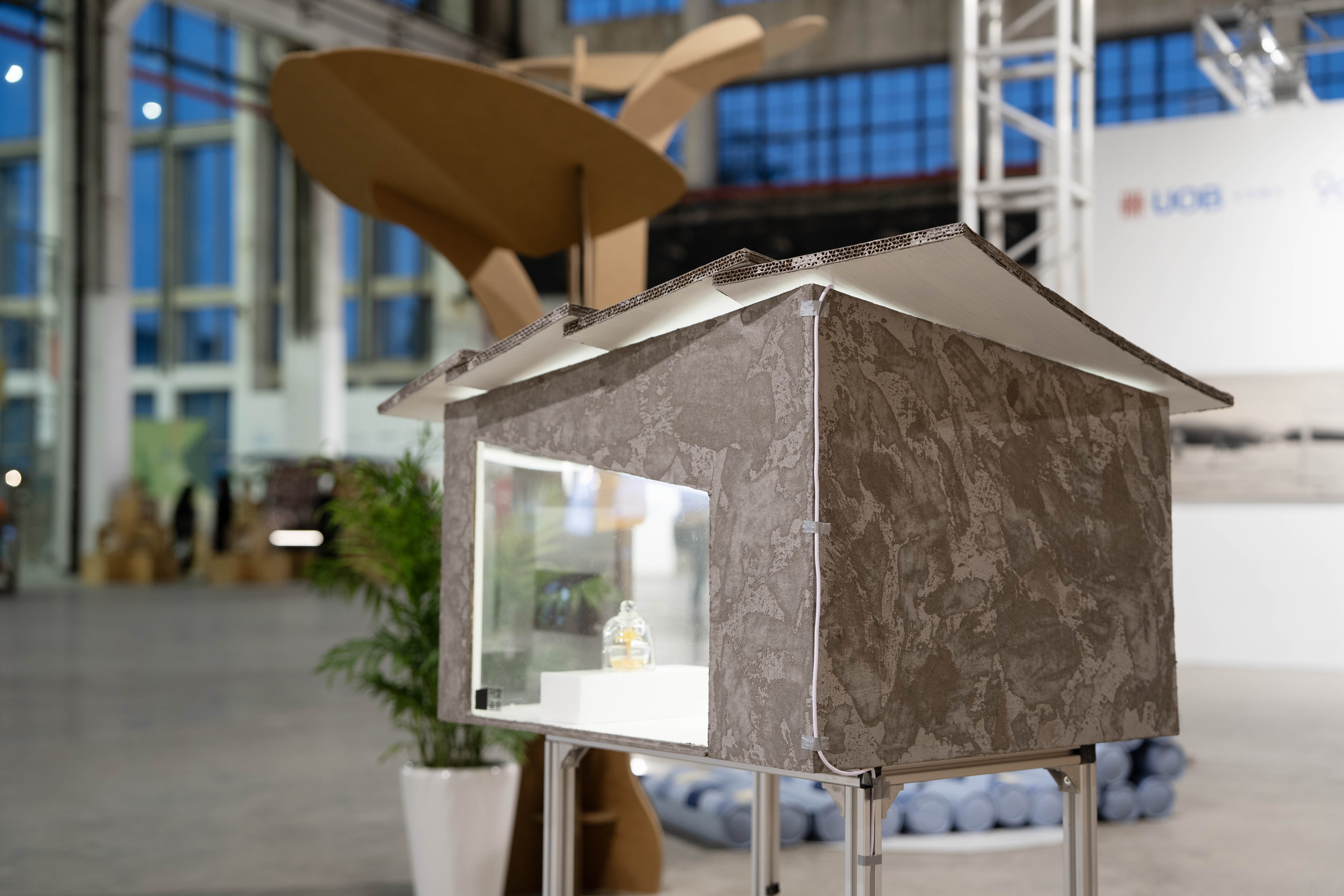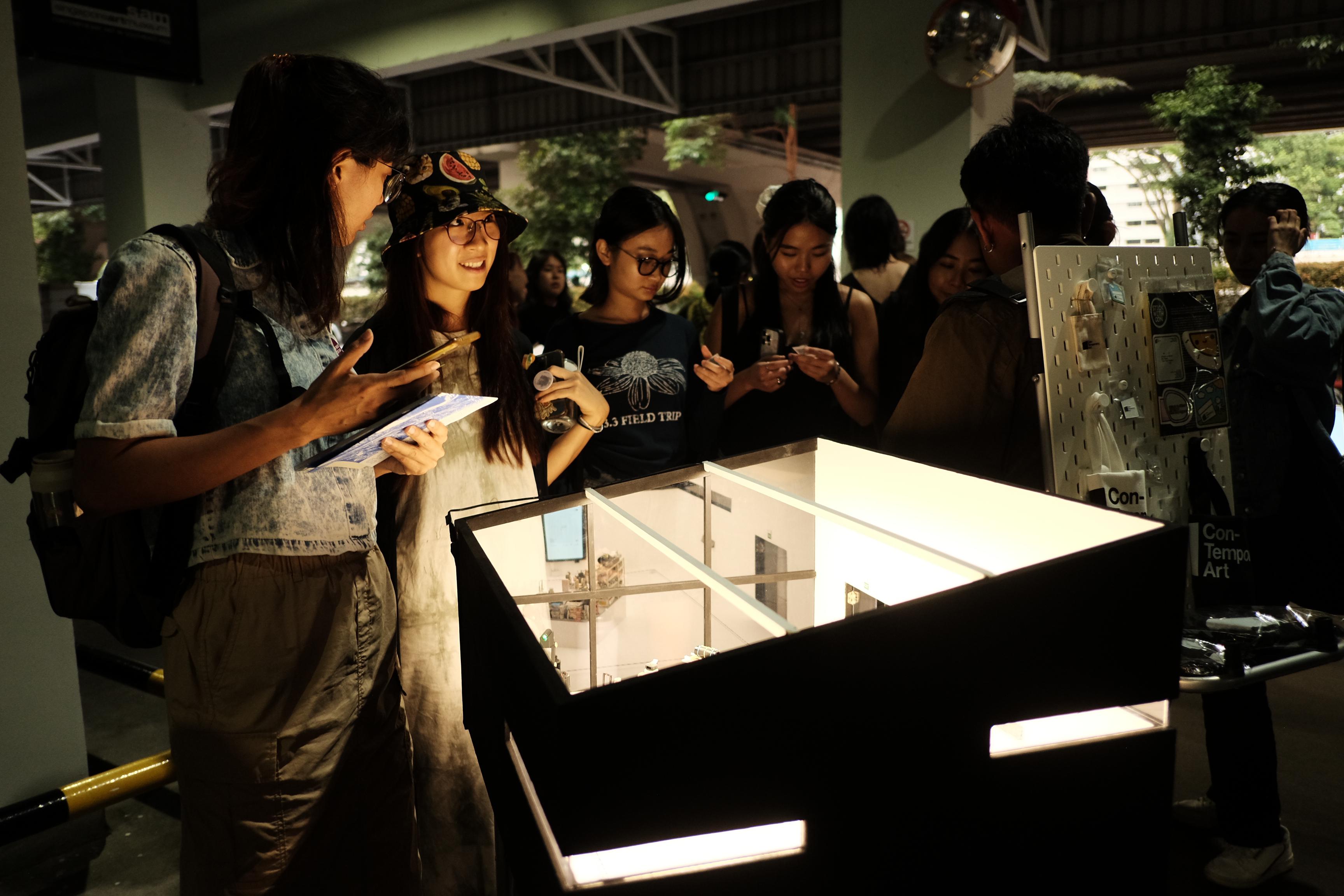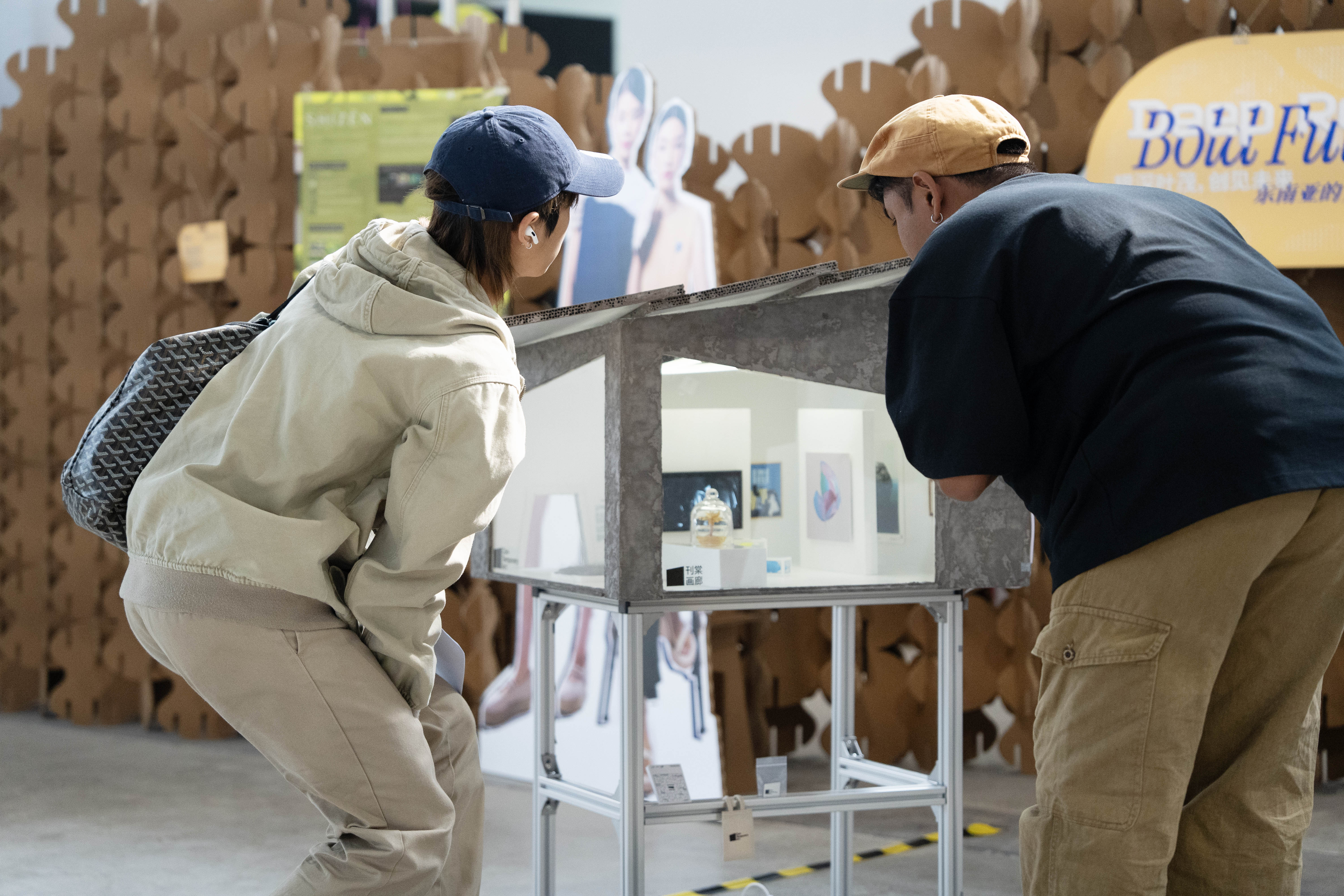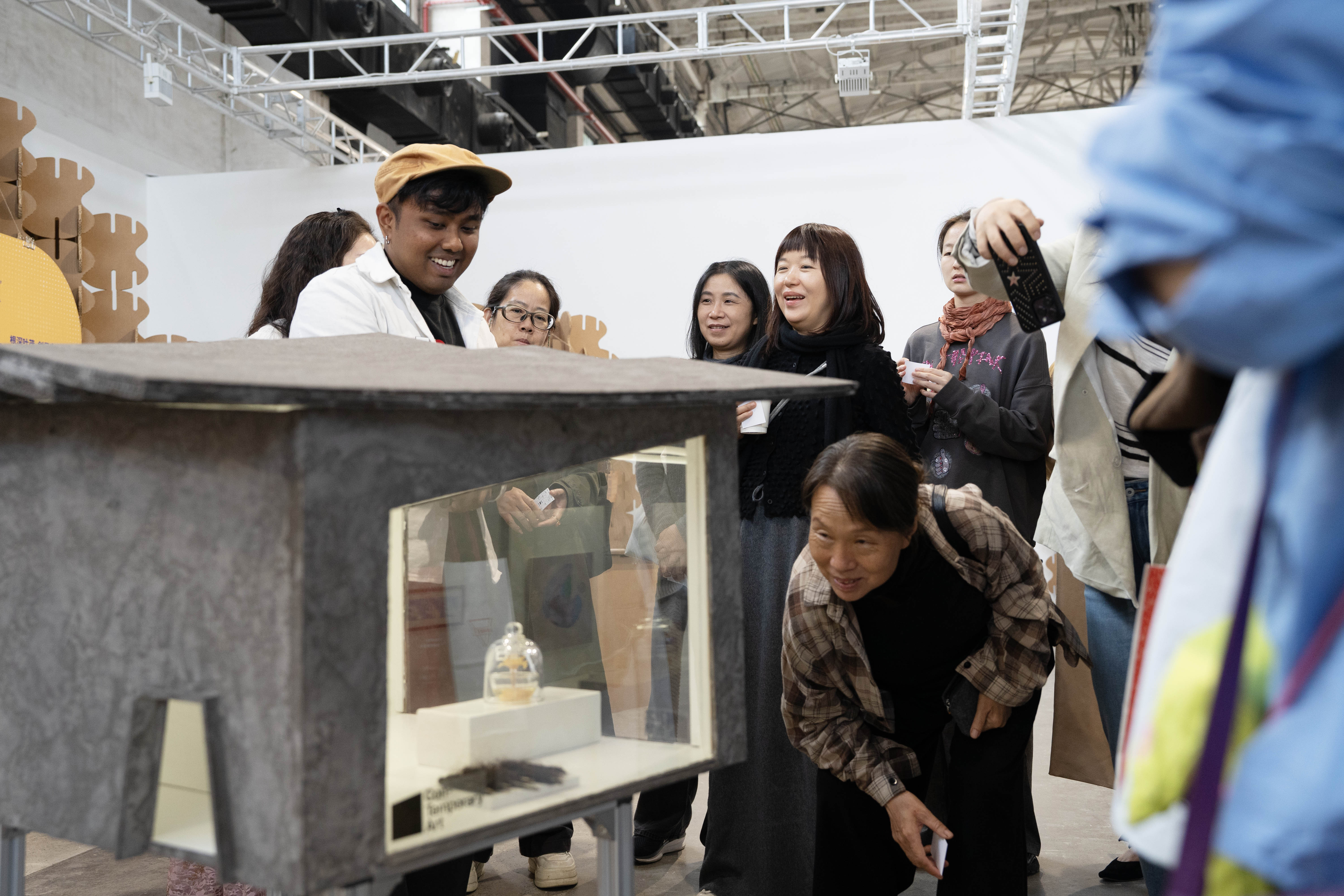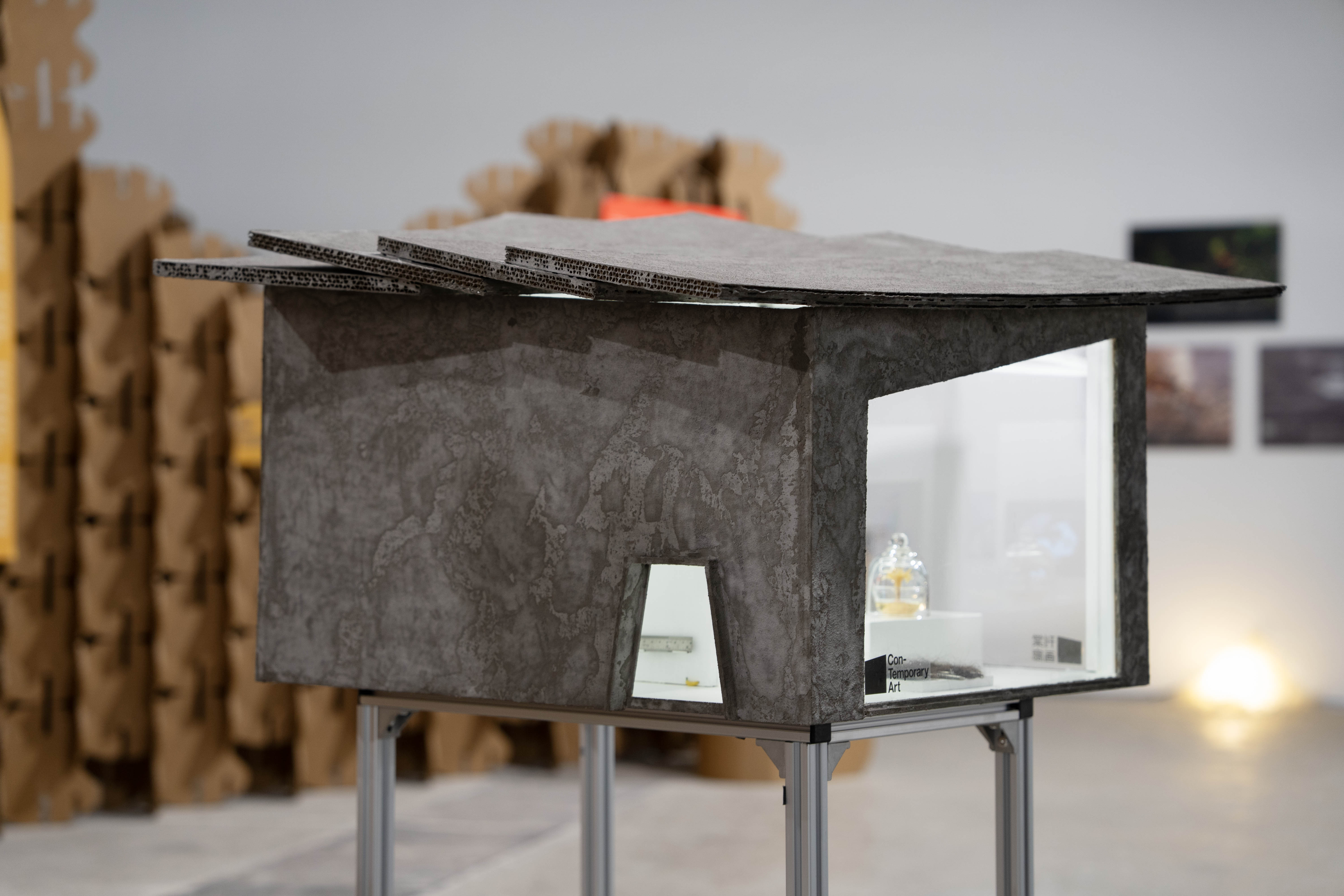

Con-Temporary Art (CTA) by Joshua Kon and Arrvinraj is a travelling exhibition space unlike any other—a fully realised contemporary art gallery compressed into a meticulously crafted 1/12-scale diorama. Inspired by the familiar white-cube gallery, this miniature installation reimagines how art can be exhibited, experienced, and shared.
Originally conceived in response to the scarcity of dedicated art spaces, CTA has evolved into a creative laboratory where artists can experiment with new ideas, test ambitious concepts, and develop works that may be impractical to realise at full scale. Each miniature exhibition is treated with the same level of care and curatorial attention as a conventional gallery, challenging audiences to reconsider notions of scale, space, and artistic practice.
The project’s title plays on the word “Contemporary”, inviting multiple interpretations. Through this subtle shift in language, CTA opens up new ways of thinking about contemporary art—whether conceptual, experimental, confident, or unexpected. Small in size but expansive in imagination, CTA demonstrates that meaningful artistic encounters can emerge from even the most compact of spaces.
“Con-Temporary Art (CTA)” by Joshua Kon and Arrvinrajis is a travelling exhibition space in the form of a portable “installation”. It is a white-cube-inspired art gallery shrunk down to a 1/12-scale diorama, but treated with the same care and attention to detail as you would a normal gallery. The project was originally created to address a scarcity of dedicated art spaces, but now acts as a test bed for ideas that would normally be too resource-intensive to realise on a normal scale. Artists are invited to “test-drive” potential ideas they wish to execute or ideas that uniquely exist in a smaller size.
The title of the project is a play on the word “Contemporary”, alluding to conceptual and time-based contemporary art projects. By inserting a single space in between, audiences can draw a wide variety of interpretations on these words and the nature of the project. “Con” may be interpreted as “Conceptual”, “Contemporary”, or even “Confident”. This provides a wide variety of lenses and notions through which audiences may view this project.
1 & 2 August 2026
Time: 2PM – 8PM
Venue: Padang Kota Lama
3 August 2026
Time: 2PM – 8PM
Venue: Armenian Street
4 August 2026
Time: 2PM – 8PM
Venue: Chinatown, Chulia
Activation 7PM
5 August 2026
Time: 2PM – 8PM
Venue: Pasar Chowrasta
Activation 7PM
6 August 2026
Time: 2PM – 8PM
Venue: Majestic Theatre
7 August 2026
Time: 2PM – 8PM
Venue: Hin Bus Depot
Activation 7PM
8 August 2026
Time: 2PM – 8PM
Venue: Beach Street
Activation 7PM
9 August 2026
Time: 2PM – 8PM
Venue: Cultprint | Armenian Park
[Artist Sharing]
The Moving Gallery: Here Today, Somewhere Tomorrow
Date: 5 August 2026 (Wednesday)
Time: 3pm
Venue: The Whiteaways Arcade
Free admission but pre-registration is required.
Join artists Joshua Kon and Arrvinraj for a conversation on the ideas, processes, and inspirations behind “Con-Temporary Art” (CTA), a travelling contemporary art gallery reimagined as a meticulously crafted 1/12-scale diorama. Through this sharing session, the artists will explore their creative journey in transforming exhibition spaces, experimenting with scale, and challenging conventional ideas of how art can be presented and experienced.
Held at The Whiteaways Arcade, the session offers audiences a closer look at the evolution of “CTA”—from its origins as a response to the lack of dedicated art spaces to its transformation into a platform for artistic experimentation and dialogue.
Discover how a miniature gallery can open up expansive possibilities, and how contemporary art can move beyond physical boundaries to reach new audiences and unexpected spaces.
Photos